
Chicago Grows Food launched the Grow Your Groceries Grow Kit program in 2020, providing grow bags, soil, seeds, and educational support to schools, churches, libraries, community centers, senior housing, farmers markets, and more.
It started as a way to bring the school garden home during the COVID-19 pandemic to help fight food insecurity and has evolved to include a dozen collaborating organizations and over 200 distribution partners across Chicago.
- Soil is contaminated in a lot of Chicago
- Grow bags are simple to start & move
- Can be used inside or outside
- Ease of bringing food home, helping build relationships with where our food comes from
- Pour soil from plastic bag into fabric bag
- Plant seeds based on seed packet (you will likely have more seeds than you need)
- Put on a plate if using indoors
- Can use plastic bag as mini greenhouse (watch video to learn more)
- Water often (likely daily depending on weather)
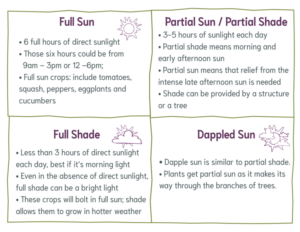
- Different plants have different sunlight requirements, so it’s important to understand what type of sunlight you get in the area where you want to grow food.
- Check the back of your seed packets or research online to learn about the type of sunlight your plants need. Look at the table below for definitions of the different types of sunlight. One benefit of fabric grow bags and containers is that you can easily move them around your growing space to help them get the sunlight they need.
- We recommend assessing the sunlight in your potential growing spaces (activity in booklet). If possible, assess the sunlight on the same day or the next day after receiving your grow kit. While you’re assessing the sunlight, you can place your plant on a sunny windowsill inside or in a mostly shaded area outside.
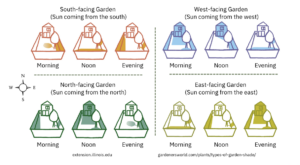
If you are using the light from windows and growing inside, keep in mind that overhangs, other buildings, trees, etc. can interfere. That is why it is best to do a sunlight assessment. Generally, this is how windows are categorized for light availability:
- North facing windows – Low Light
- East or West facing windows – Medium Light
- South facing windows – Bright Light
- North facing windows – Low Light
Check your seed packets or research online to learn how much water your plants need. Fabric grow bags and containers dry out more quickly than raised beds.
Watering best practices
- Water is a finite resource which means that we could run out of it some day. Because of this, it’s important that we conserve or use as little water as we can when watering our plants.
- Water your plants each morning before it gets too hot or be sure to get into a daily routine.
- Before watering, feel the soil below the surface to see if it feels damp (stick your finger into the first joint). If it is still damp you don’t need to water your plants. You also don’t need to water your plants if it has just rained or is going to rain.
- Water your plants slowly, making sure the water doesn’t flow over the sides of the container. Stop watering once you see water flow out of the bottom of the container.
- Always water at the base of the plant and try to not get the leaves wet. Wet leaves attract pests and can cause diseases.

